Showing posts with label ecosystem. Show all posts

Thursday, July 24, 2025

Bear River Serenity


At some point, while waiting for pelicans to appear, you suddenly turn around and see the Bear River, like a thin ribbon winding into infinity. You’re struck by the raw, untamed beauty of the Bear River.

Generally, life is good.


Tuesday, March 25, 2025

Antelope Island Under a Cloudy Sky


Antelope Island looks especially stunning under cloudy skies. When clouds diffuse sunlight, they create soft, even lighting that enhances the island’s colors and textures.

Generally, life is good.


Thursday, March 6, 2025

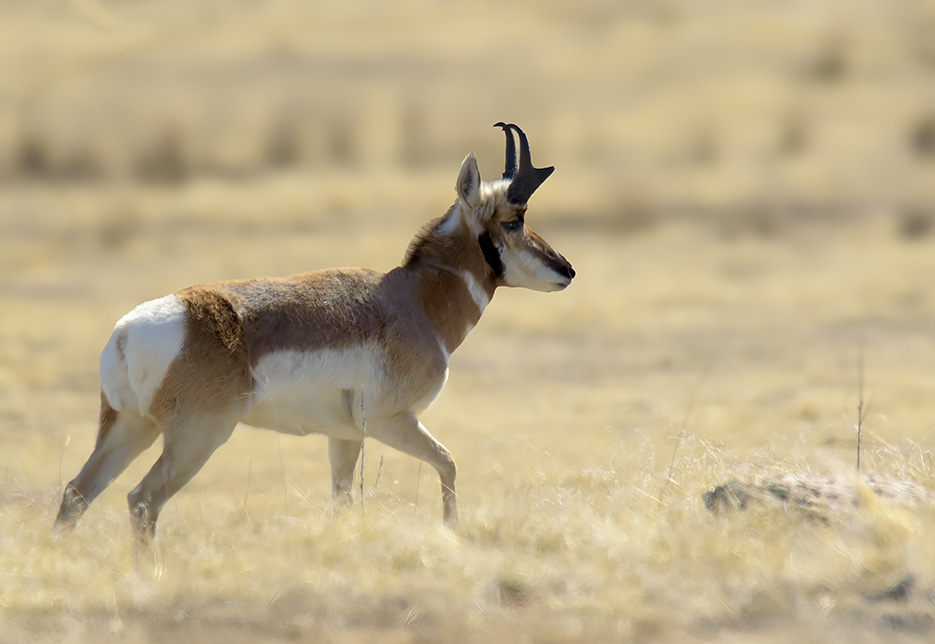
A Young Male Pronghorn on Antelope Island


My encounter with a young male Pronghorn began with disappointment.  He was far away on the top of the hill. The decision to drive around the hill in the hope of getting closer to the young animal turned out to be surprisingly successful. 


I think this Pronghorn was about 3 to 5 years old, his horns were more developed and thick with two horns.


Male pronghorns can face some risks when they are alone, especially when it comes to predators like coyotes, but they are capable of defending themselves.

Pronghorns are incredibly fast, capable of reaching speeds up to 55 miles per hour (88 km/h), making them one of the fastest land mammals in North America. 

A lone male pronghorn, just like a group, can usually outrun a coyote, which is why they are less likely to be caught in a direct chase.


Seeing a male Pronghorn alone is not uncommon.  Outside of the breeding season, male pronghorns tend to be more solitary. They typically separate from groups of females and juveniles. 

Males prefer solitude during times when they are not competing for mates or protecting a group.


Generally, life is good.


Friday, February 14, 2025

On the Great Salt Lake


The distant mountains softly fade through the haze.  
A soft, blurry island in the fog.  
A place where earth and heavens meet.

Generally, life is good.

.


Saturday, January 25, 2025

Aspens and Spruce


Sometimes trees each with their own kind of soul or rhythm end up in the company of other trees that might seem very different, yet coexist in the same space. Probably, it's nature’s way of balancing things out. 

Generally, life is good.


Sunday, January 12, 2025

Great Salt Lake in January


My first foray to Antelope Island after a two-month break. The island greeted me warmly and delighted me with its modest beauty.

Generally, life is good.


Sunday, December 15, 2024

Wild Beach in October


Old broken tree, worn and pale,
Buried deep in golden sand. 
The whispers of the desert.

haiku # 1.

Generally, life is good.


Friday, November 3, 2023

Notes to Self. The American Buffalo

We are the most dangerous species in the world. We kill and destroy for our own gain, needlessly and brutally, but we can also one day come to our senses and begin to save what we have almost destroyed.

A few days ago I watched Ken Burts' film " The American Buffalo" about the tragic history of the American Buffalo, which sustained the lives of Native people for generations.

These largest surviving animals that once roamed the Great Plains may have gone extinct in the late 1800s.  They were hunted and killed by white people.  A dead Buffalo was a source of income for whites and one less Buffalo for use by natives. 


November 20, 2020. Antelope Island


Before buffalo herds were driven to the brink of near extinction, once upon a time they roamed the continent in numbers of up to 50 million. 


September30, 2022.  Antelope Island

When calves are born they can get up within 30 seconds and soon go with the herd but without their mother they cannot survive.  When you kill a female buffalo her calves will die.  So many females were killed, and so many calves have died over decades of buffalo hunting. 


June 14, 2022. Antelope Island

The Buffalo were practically exterminated by white hunters for their skins, fur, horns and tongues.

What happened was a disgrace to American people in general. It was unprecedented cruelty and greed.


December 17, 2020. Antelope Island

The conservationists brought Buffallo's population back from a few hundred to nearly 350,000 today.

One day they put 15 Buffalo on the train and brought them west to the Great Plains. It was the largest migration of these animals. 

The buffalo were brought to Oklahoma to their native land, their old home and gradually the population of these amazing creatures began to increase.


September 30, 2022. Antelope Island.

Once upon a time on February 15, 1893 twelve buffalo, 4 bulls (males), 4 cows (females) and four calves were taken by boat to Antelope Island by William Glassman and John Dolly. These animals came from a small private farm in Texas and grew into a herd on the island.

 Now we have about 600 buffalo, and they are well protected.

When you see a buffalo, you see life, you see hope, you see future.

Generally, life is good.


Friday, March 17, 2023

Sketches in March - I. Today


Today I saw hundreds of American Avocets on Antelope Island, who gathered in one long line offshore.  It was such a joy to see them after a long and cold winter.

Later, I met a coyote, who crossed the road right in front of my nose. That was so unexpected that I didn't know what to do for the first few seconds. When I grabbed my camera and came out of the car, the coyote was heading into desert.  Following him seemed silly at the begging but it paid off at the end.

Life goes on.


Sunday, January 1, 2023

Great Blue Heron Displays Its Plumage While Preening


A snowy deserted space.  A lonely Great Blue Heron froze like a stature on the thin ice covered with snow.  And suddenly, if as awaking up from its dream, the Heron moved a little bit and, to my indescribable delight, began to preen.

In instant the Heron's feathers suddenly came to life with all possible colors, shades and tones.


Life goes on.


Friday, July 15, 2022

Cows at the Bear River MBR


It's a little bit odd to see cattle at the Bear River MBR during summer but the cows were placed in the bird refuge during summer months for a very important reason.  They fight against phragmites, an invasive plant known as a common reed. 

Phragmites grow very quickly, choking native plants that give food and nesting for birds in the refuge.  

Unfortunately,  cows can't stop phragmites from growing but their grazing helps to slow down the spread of phragmites.


Generally, life is good!